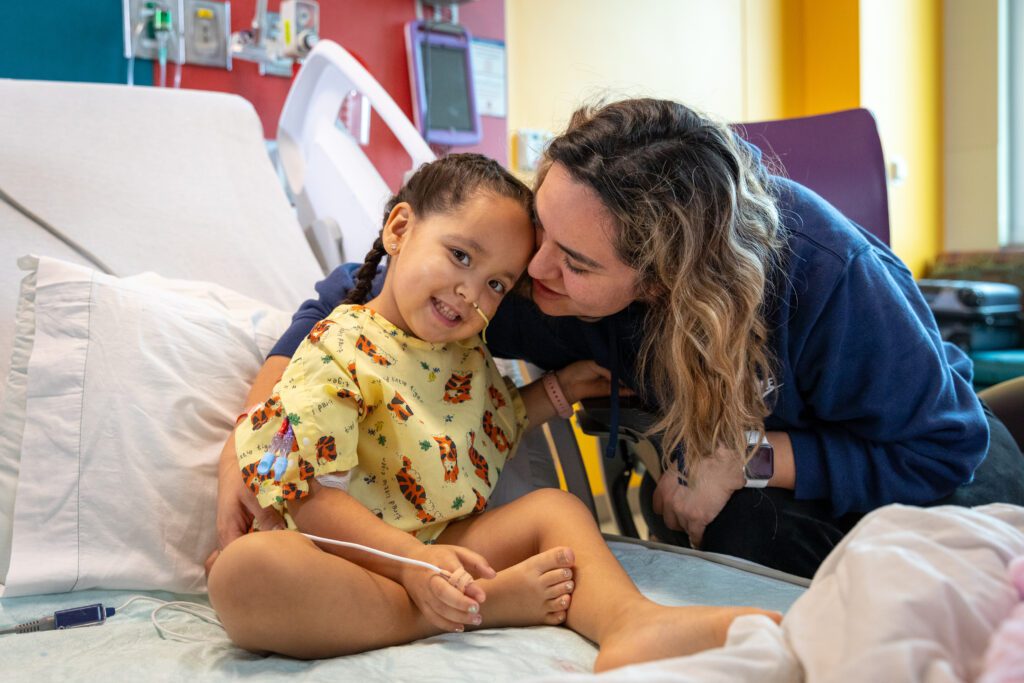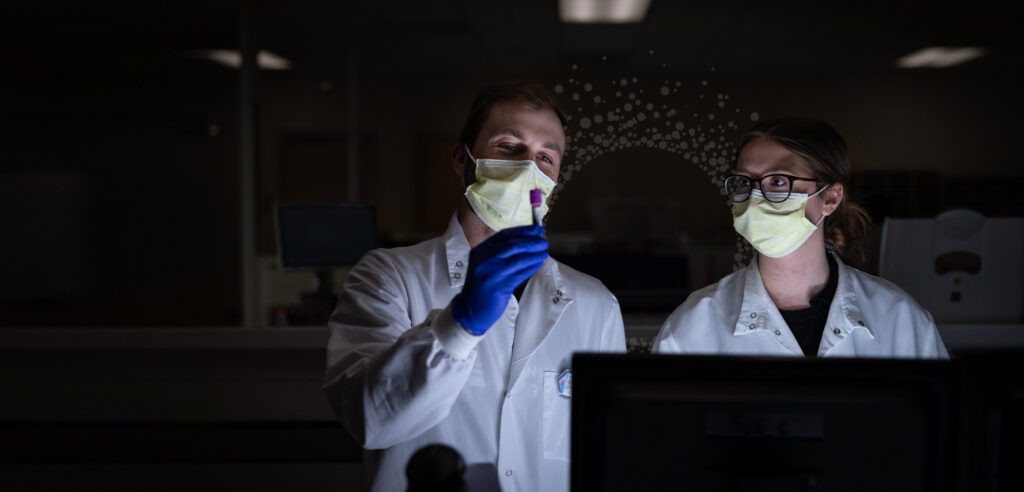
A hospital might not seem like a natural place for toys, dolls and bubbles, but for kids facing an illness or injury, play can be essential to helping them understand what’s happening and easing the anxiety that comes with it.
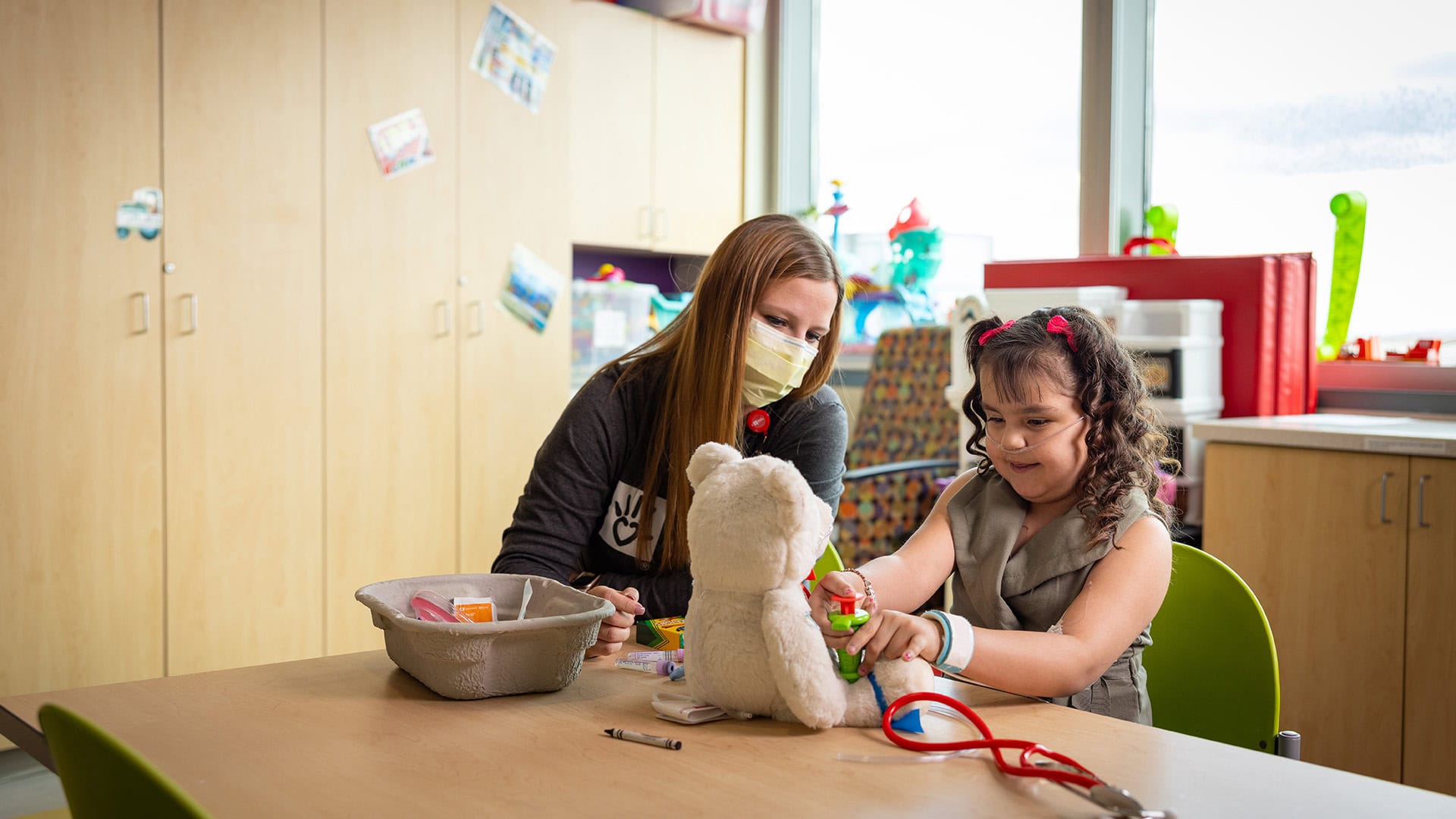
At Phoenix Children’s, Child Life specialists use play and other techniques to help kids cope with their diagnosis and treatment.
The Role of Play
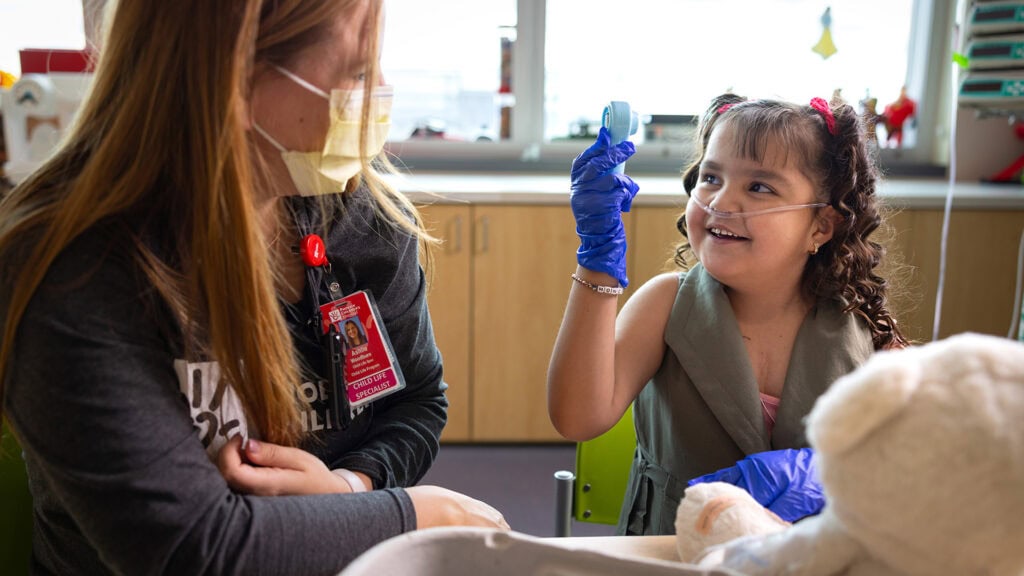
“For kids, play is universal,” says Stephanie Wilson, a certified Child Life specialist who supports patients in Phoenix Children’s outpatient clinics and dialysis center. “Play is how we build rapport, assess a situation and learn about a patient.”
Her role is to help kids understand what’s happening to their bodies and give them coping skills.

Wilson often uses a stress ball as part of a grounding technique to cope with anxiety. “We’ll talk about what the stress ball is made of, how it feels, the colors in the room that they notice,” she explains. “We also practice deep breathing. For younger kids, we’ll blow bubbles or a pinwheel.”
Sometimes, play is a simple distraction—playing I Spy, Uno or a game on a tablet. Games or even social media scrolling (for teenagers) can be therapeutic and provide a sense of normalcy during a challenging time.
Family Involvement
Child Life specialists also involve and empower a patient’s family. “I’m not going to be at every procedure or with them at their primary care visits,” Wilson says. “We want family members to have the tools to support their kids when we’re not there.”
That might include teaching parents deep-breathing techniques or how to best hold their child while they’re getting an IV in the arm. For kids on kidney dialysis, Wilson includes siblings, too.
“We have a robot in the dialysis center that the sibling can control from their house and compete in a scavenger hunt,” she says. “We might also have the patient play virtual tic-tac-toe with their sibling.”
- “It’s really important that we utilize play to help them get through hard things because it builds self-esteem.”Stephanie WilsonChild Life specialist
Family participation and play provide a short-term sense of normalcy and long-term benefits.
“It’s really important that we utilize play to help them get through hard things because it builds self-esteem. Sometimes they don’t realize they’re playing. They come in, they’re scared, but then they realize, ‘Wow, I cried, but I was also brave at the same time. I was able to do that really hard thing, and I can probably do another really hard thing if it comes up,’” Wilson says. “We gave them those skills.”
Support from generous people like you makes it possible for Phoenix Children's to offer Child Life and over 170 other programs that help kids heal.